
Debris removal
The debris a demolition creates, separated and loaded on site, leaving covered and documented to a facility that is permitted to receive it.

When people call us about debris removal
- A job has finished and left more material than anyone expected
- A property is full of accumulated material before work can begin
- A strip-out is producing more than the building can stage at once
What debris removal covers
- Mixed construction and demolition debris
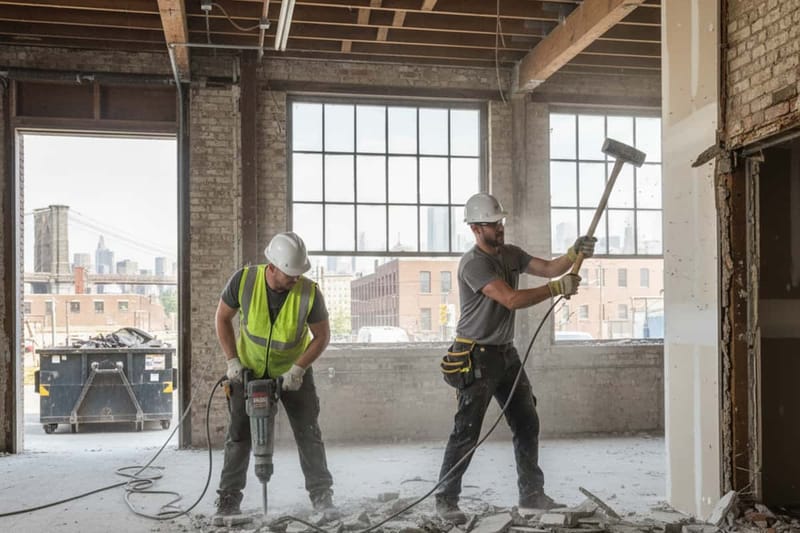
- Concrete, brick, timber, drywall, metal and glass, separated where it matters
- Loading by hand where machine access is not possible
- Segregation of material that cannot travel in a C&D load
- Documentation for each load
Some material is not C&D debris, no matter where it came from
Anything contaminated with asbestos or lead is excluded outright. So are fluorescent tubes and their ballasts, appliances, tyres, drums, fuel tanks and containers over ten gallons or with more than an inch of residue in them. These get separated on site and routed properly. Putting them in a C&D load does not make them disappear, it just moves the problem to the transfer station, and it comes back.
Where the debris route runs differently
Separation and documentation do not change. Where the container can stand does, and it decides the schedule of everything above it.
Manhattan: staged inside, moved in windows
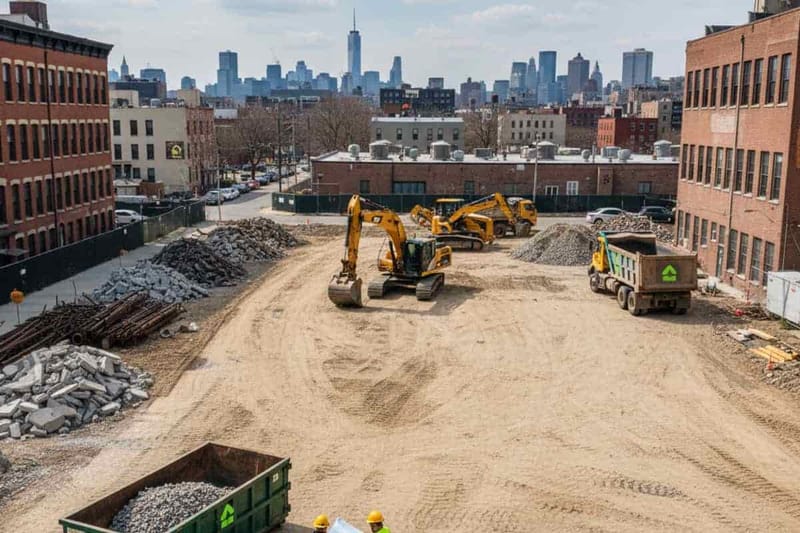
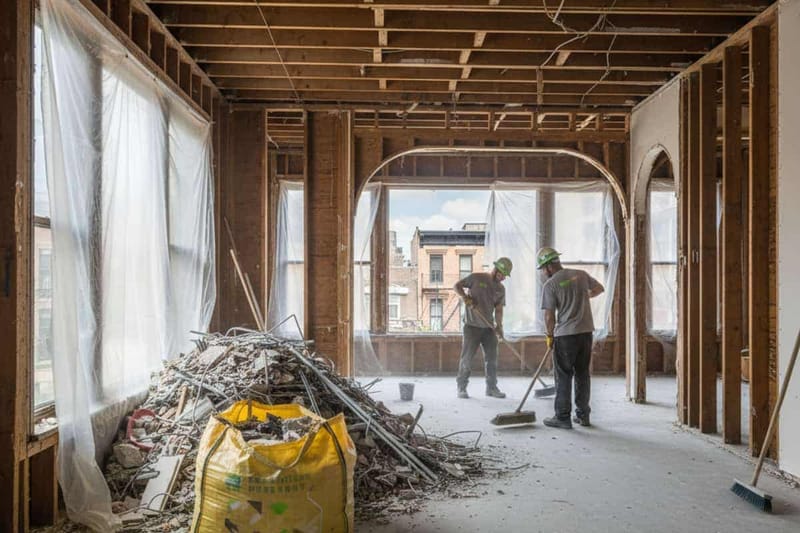
There is rarely a place to put a container, so material is separated and bagged inside and leaves in the windows the building allows. The load count is set by the lift and the hours, not by the size of the pile.
Brooklyn: through the house to the kerb
On a row house with no side access every bag comes out through the front, and the container stands on the street under a permit. We set the route and the permit before the first load rather than assuming the kerb is free.
Queens: a container on the driveway
Where the lot has a driveway or a side path the container sits on the property, loading runs by machine where the material allows, and the street permit question usually does not arise.
How debris removal runs
The order matters more than the tools. This is the sequence for debris removal.
We look at what is there
Volume, weight and what is mixed into it. Dense material fills a container by weight long before it fills it by volume, and that decides the number of loads rather than the size of the pile.
We separate before we load
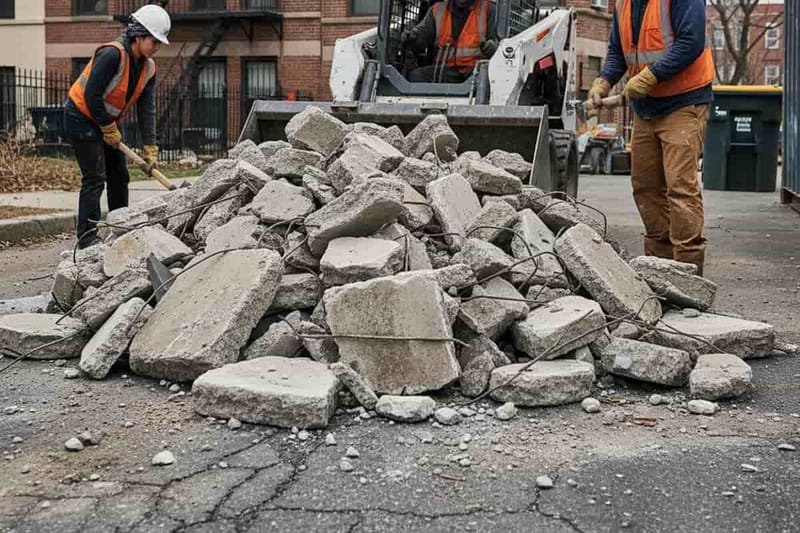
Concrete, timber, metal and drywall are pulled apart on site where it is worth doing. Anything that cannot travel as C&D comes out of the stream here, not at the transfer station.
We work out where the material stages
On many New York streets a container needs a permit, and where the only place for it is the kerb or the sidewalk that has to be arranged before the first load rather than assumed. Where there is nowhere at all, the material is staged inside and moved in booked windows.
It leaves covered and documented
Load by load to a permitted transfer station, with paperwork for each one.
What moves the price on debris removal
Every one of these moves the number, so you can see what a quote is actually responding to. Tell us the ones you already know when you call.
- Volume, and weight where the material is dense
- How much hand loading is needed versus machine loading
- How well the material is separated when we arrive
- Where a container can legally stand, and whether one can stand at all
- Whether anything needs a separate disposal route

Debris removal: your questions
What if there is asbestos in the debris?
Work stops on that material. It is not a C&D item, it cannot go in the load, and it goes down the abatement route instead. That is not a judgement call we take on site.
Related to debris removal
-

-
-
-
-


Get a price for debris removal
Call and describe the job. Most of the time we can scope it on the phone and confirm on site.
Seven days a week, 7am to 11pm. Emergency calls answered around the clock.
Send the details