
Selective and hand demolition
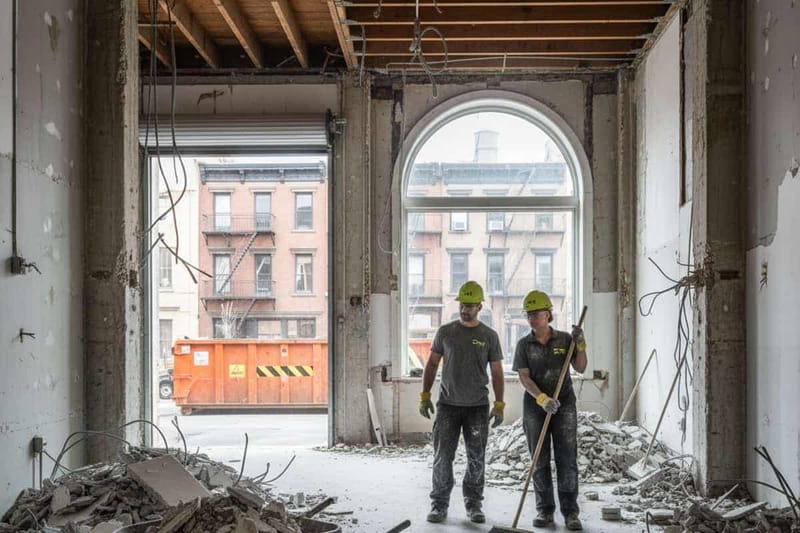
One wall, one bay, one floor slab opening. Removed exactly, by hand where that is the only way in, with everything around it still standing and still finished.

When people call us about selective demolition
- A layout change needs one wall out and the rest of the finishes protected
- A new stair or lift needs an opening cut through a slab
- A tenant space is being reconfigured while neighbouring units trade
- An engineer has specified partial removal ahead of strengthening work
What selective demolition covers
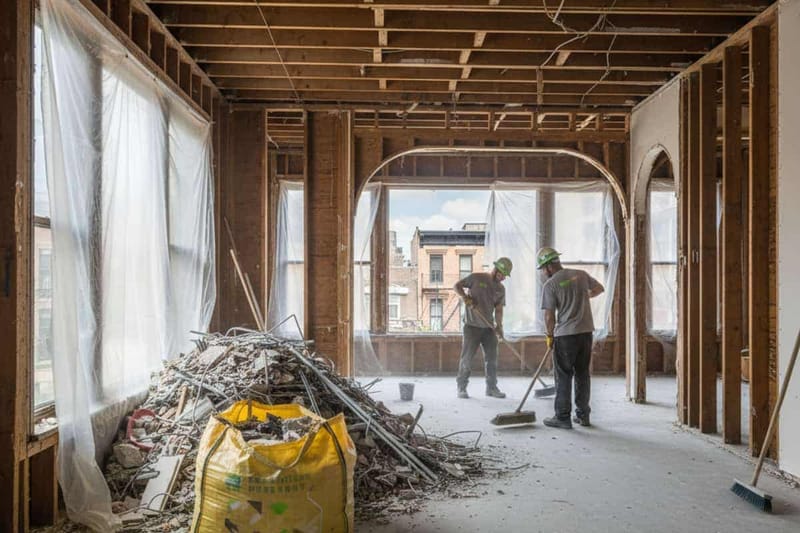
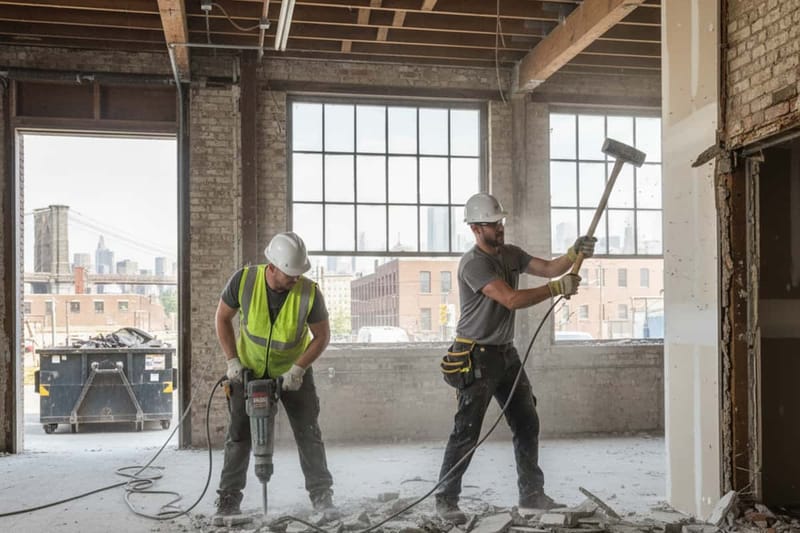
- Hand demolition, meaning removal with hand and small powered tools rather than a machine, where access, adjacency or the surrounding finishes rule a machine out
- Individual partitions and masonry walls
- Slab and floor openings, cut rather than broken where the surround has to stay
- Partial ceiling and bulkhead removal
- Removal of specific structural elements under an engineer’s direction, with temporary support in place
- Making good the cut edges so the following trade has a clean line
The support goes in before the element comes out
Anything carrying load gets propped or needled before it is touched, to a scheme that has been designed rather than judged on the day. That is the whole discipline of selective work. If a wall turns out to be doing more than the drawings say, we stop and get it looked at rather than carrying on and finding out later.
Where selective work runs differently
The method is the same everywhere. What changes from one part of the city to the next is how we reach the element and what stays occupied around it.
Queens: occupied two-family homes
Much of Queens is owner upstairs and tenant downstairs, so a wall or a floor opening in one unit is hand work inside an occupied building. We seal the work off, agree the hours, and run the debris out on a route that does not pass the other front door. Where the lot has a driveway or side access, the material leaves by machine instead of by hand and the price reflects it.
Brooklyn: party walls and no side access
On a row house the element you want out is often attached to a wall you share with a neighbour. That rules out anything heavy. We cut and remove by hand, prop before we touch anything carrying load, and carry the material out through the house because there is no other way.
Long Island: bigger lots, local filing
On a detached house in Nassau or Suffolk there is usually room to stage material outside and get a machine to the exterior, so the hand work is confined to where the surrounding finishes have to survive. The filing goes to your town or village building department rather than DOB, and we confirm what it asks for at your address before we quote.
How selective demolition runs
The same order every time, whatever the scale.
We walk the site
We look at what is coming out, what is staying, and how we get to it. Access decides most of the plan in this city: a fourth-floor walk-up and a loading dock are two different jobs even when the scope is identical.
We tell you which filing you need
Full structure, interior gut, or work small enough to sit outside a filing. You get a straight answer on which path applies and what it needs before we quote, not after you have committed.
Asbestos gets settled first
Anything built before April 1987 needs an asbestos assessment before a permit is issued. We arrange the investigator and the ACP-5 filing. This is the step that most often moves a start date, so we start it early.
We protect, then we start
Floors, stairs, lift lobbies and anything staying get covered before a tool comes out. Utilities are proved dead. Then the work runs in a set order, with the route material takes out of the building settled before any of it moves.
You get the site back clean
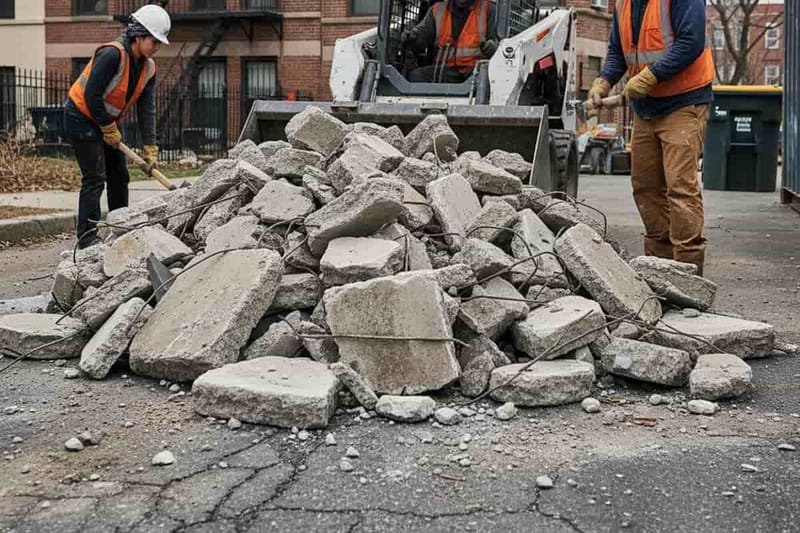
Loads leave covered, to a permitted transfer station, with documentation for each one. We sweep out and hand over a space the next trade can start in.
What moves the price on selective demolition
Every one of these moves the number, so you can see what a quote is actually responding to. Tell us the ones you already know when you call.
- Whether the element is load bearing, and what temporary support it needs
- Cut method, since sawing to a clean line costs more than breaking out
- How much protection the surrounding finishes need
- Working hours, if the building is occupied
- Whether the work sits inside an existing filing or needs its own

Selective demolition: your questions
What is hand demolition, and when does a job need it?
It means the structure comes apart with hand and small powered tools instead of a machine. A job needs it when a machine cannot physically reach the work, when the floor will not carry one, when the element being removed is attached to something that has to survive, or when the building around it is occupied and a machine would be intolerable. It is slower and it costs more per cubic metre, and on the right job it is the only method that leaves the rest of the building usable.
How do you know if a wall is load bearing?
We look at direction of span, what is above it, and how it is built, and where there is any doubt the answer comes from a structural engineer rather than from us. We would rather delay a day than remove something that was holding a floor up.
Can you cut an opening without cracking the ceiling below?
Cut, yes, rather than break. Saw cutting to a marked line is slower and more expensive than breaking out, and it is the reason the room below still has a ceiling afterwards.
Can this run while the offices next door are working?
Usually, with agreed hours, sealed separation and the noisy operations blocked into windows everyone knows about in advance.
Related to selective demolition
-
-
-
-
-


Get a price for selective demolition
Call and describe the job. Most of the time we can scope it on the phone and confirm on site.
Seven days a week, 7am to 11pm. Emergency calls answered around the clock.
Send the details