
Full demolition of a structure
A whole structure comes down, whatever it is. The sequence barely changes between building types. What changes is who has to be told, and what has to be got out of the building first.

When people call us about structure demolition
- A commercial, industrial or mixed-use building has reached the end of its use
- A freestanding structure on a larger site has to go while the rest keeps operating
- A structure is being removed to release the land underneath it
- An insurer or a lender needs a damaged building removed rather than repaired
What structure demolition covers
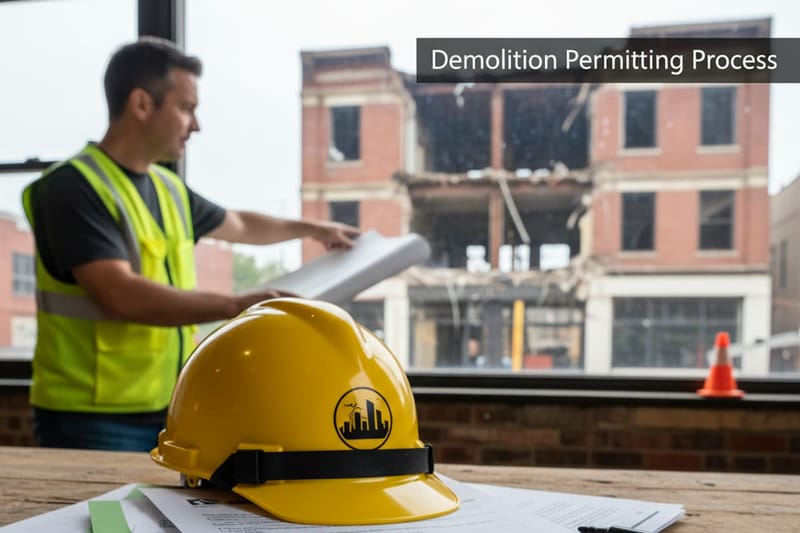
- The demolition filing and every document it waits on
- Utility disconnect certifications for gas, electric, water and steam
- Notice to adjoining owners and rodent extermination certification
- A pre-demolition survey of what is inside: plant, tanks, transformers, refrigerant and process residues
- Asbestos assessment, and abatement coordination where it is triggered
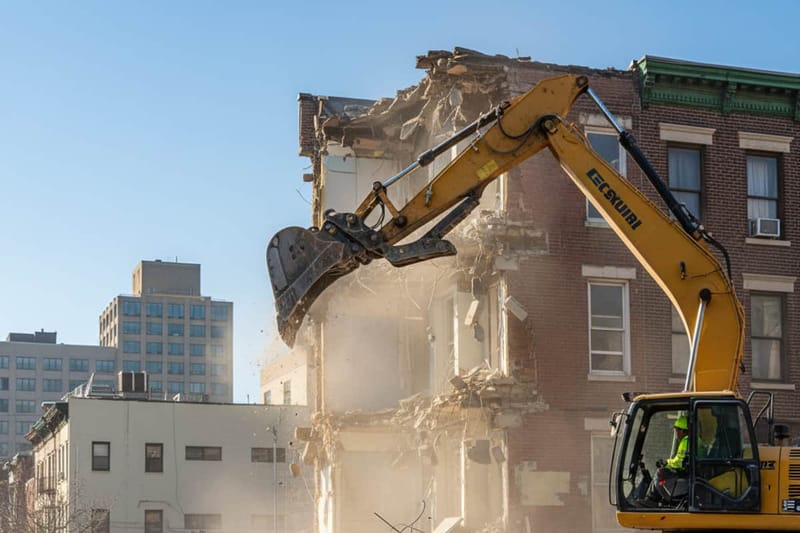
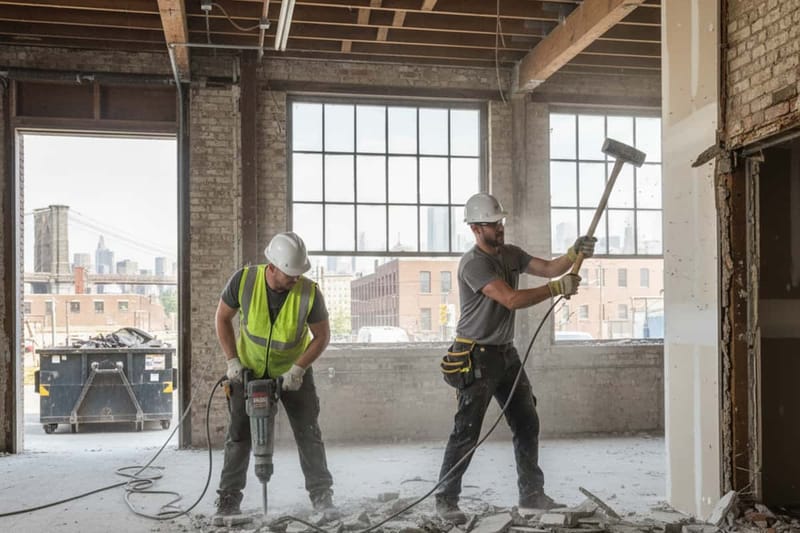
- Soft strip, then structural take-down, by machine or by hand as access allows
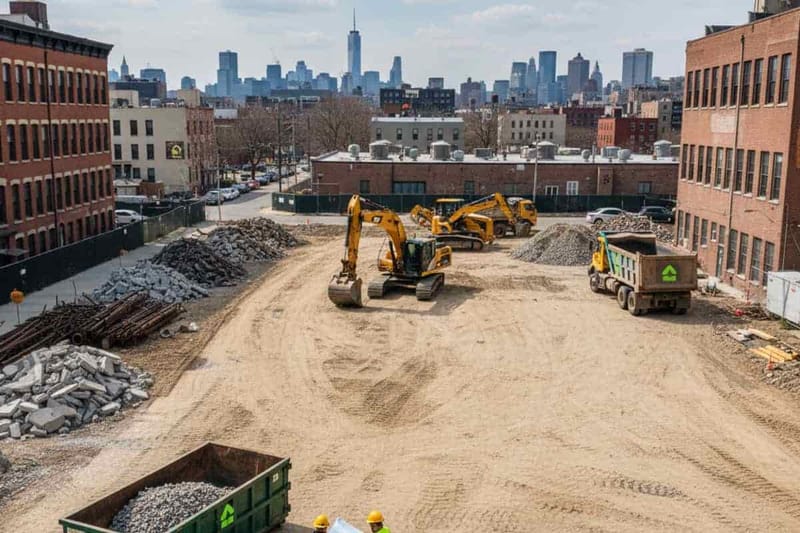
- Foundations, slab and below-grade structure, and clearance to grade
On a non-residential building, what is inside decides the programme
A house is largely known before anyone opens it. A commercial or industrial structure is not: there may be plant, tanks, transformers, refrigerant lines or residues from whatever the building used to do, and each of those is removed by someone specific under its own rules before general demolition can start. That survey is the first thing we do and it is the thing most often left out of a cheaper price, because it is the thing most likely to add weeks. A number produced without it is a guess about the parts nobody has looked at yet.
Where a full take-down runs differently
A structure comes down by machine wherever a machine can reach it. Whether one can, and who has to be told before it does, depends on where the building stands.
Queens: machine access on a residential lot
Queens is the borough where a driveway, a side path or a rear alley usually lets an excavator reach the work. That makes a mechanical take-down of a detached house, a garage or a small commercial building routine here rather than exceptional, with the DOB demolition filing, the utility disconnects and the adjoining-owner notice running exactly as they do anywhere in the city.
Staten Island: detached lots
Detached houses on their own lots make a whole-structure demolition an ordinary job on Staten Island. Room to stage a container and swing a machine takes the hand work out of the sequence and shortens the programme.
Long Island: your town, not DOB
Outside the five boroughs the demolition filing goes to the town or village building department, and each one asks for its own set of documents. Asbestos still has to be surveyed before the structure comes down. The lots are bigger, the machine reaches the work, and the material stages on the property instead of on the street.
How structure demolition runs
The order matters more than the tools. This is the sequence for structure demolition.
Survey what is in it, not just what it is
Structure, neighbours and access, plus a walk of the plant, tanks and services that have to be dealt with by someone else before we can start.
File and gather
Demolition application with utility certifications, adjoining-owner notice, rodent certification and the site safety submission.
Clear the specialists out first
Abatement, tank closure, refrigerant recovery and anything else with its own licensing, in the order that unblocks the filing.
Soft strip, then take down
Non-structural material out and separated, then the structure itself, by machine where it can reach and by hand where it cannot.
Below grade and sign off
Foundations, slab and below-grade structure out to the agreed level, then the post-demolition inspection.
What moves the price on structure demolition
Every one of these moves the number, so you can see what a quote is actually responding to. Tell us the ones you already know when you call.
- What the building was used for, and what that left inside it
- Whether a machine can reach the structure or it has to come down by hand
- How much of the below-grade structure comes out
- Asbestos findings, and whether abatement is triggered
- Whether anything adjoining stays in use while it runs

Structure demolition: your questions
Is this different from demolishing a house?
The sequence is the same and the front end is not. A dwelling is largely knowable before anyone opens it. A commercial or industrial structure has to be surveyed for what is inside it first, because plant, tanks, transformers and process residues each come out under their own rules before general demolition can begin. If your building is a house, the residential page is the right one.
Can the structure come down while the rest of the site keeps running?
Often, and it is a large part of what the price is answering. It means an exclusion zone the rest of the site can work around, protection where the two meet, agreed hours for the loud operations, and a haul route that does not cross an operating yard.
How much of what is below ground comes out?
Whatever the next use needs, and it is worth deciding early because it moves the number more than the building above it does. Clearing to grade and leaving a sound slab are different jobs at different prices, and so is taking out a basement structure in full.
Related to structure demolition
-
-
-
-

-


Get a price for structure demolition
Call and describe the job. Most of the time we can scope it on the phone and confirm on site.
Seven days a week, 7am to 11pm. Emergency calls answered around the clock.
Send the details